Fallow deer is Denmark's second largest deer species and is easily recognizable when you know what to look for. The deer's broad, shovel-shaped antlers are characteristic, and both males and females have a distinctive mirror patch with black markings around the long tail.
However, the species can vary surprisingly much in color. Some animals are classically reddish-brown with white spots, others are very dark, and some are almost completely white. This makes fallow deer one of the most visually varied deer species in Danish nature.
In this guide, we cover fallow deer biology, characteristics, rut, social behavior, signs, and hunting – and explain the difference between fallow deer, doe, roe deer, and fawn.
What is fallow deer?
Fallow deer is the common name for the species.
The adult male is called a fallow deer or simply deer. The female is called a doe, and the young animal is called a fawn.
Young male deer can be referred to as a young buck before they join as adult breeding animals.
Fallow deer is larger than roe deer, but smaller than red deer. This gives the species an intermediate position, which also makes it useful to know when identifying deer from a distance.
Is fallow deer originally Danish?
Fallow deer has a long history in Denmark, but the species disappeared from our area after the last ice age.
It was later reintroduced in the Middle Ages, among other things as a hunting and ornamental animal. Herds were kept in menageries and on larger estates, and the species has since established itself in many places as free-living wildlife.
Today, fallow deer can be found in several places in the country, both in large known populations and as smaller local occurrences.
How to recognize a fallow deer
The easiest combination of characteristics is body size, tail, and mirror patch.
Fallow deer has a relatively long tail compared to roe deer. The hindquarters have a light mirror patch, and the dark markings can resemble three vertical lines – popularly described as the number “111”.
In the deer, the most obvious characteristic is added: the broad shovel antlers in adult animals.
If you see a medium-sized deer species with a long tail and clear black-and-white hind markings, fallow deer is an obvious candidate.
Color variants in fallow deer
Fallow deer exists in several color variants.
The classic summer coat is reddish-brown with light or white spots. In winter, the fur becomes darker and more uniform.
But there are also very dark animals and white variants.
A white fallow deer is not necessarily an albino. In known Danish populations, there are white animals with normal pigmentation in the eyes and muzzle.
Color alone should therefore not be used for species identification.
The fallow deer's antlers
The fallow deer is known for its shovel-shaped antlers.
In young deer, the antlers are initially simpler. With age and development, they become broader, and in mature deer, the characteristic shovels form.
As with other deer, the antlers are cast and regrown every year.
The new antlers grow under velvet until they are fully developed and rubbed.
Can you determine the age from the antlers?
You can often distinguish a young deer from a fully developed, mature deer, but the exact age cannot be reliably determined from the number of tines or the size of the shovel.
Food, genetics, condition, and local conditions affect the antlers.
During hunting, age assessment should therefore be based on a holistic view of body structure, neck, head, behavior, and antlers – and with respect for the uncertainty that comes with assessing live animals.
Fallow deer live in herds
Fallow deer is social and often moves in groups – herds.
Outside the rut, males and females can live in separate herds. The hindquarters – or rather the does – move with fawns and other females, while the deer can gather in their own groups.
The size of the herds depends on the season, population density, food, and disturbances.
In areas with a lot of fallow deer, very large herds can be seen in open areas.
When is fallow deer in rut?
Fallow deer rut typically falls in October and November.
During this period, the deer's behavior changes significantly. They seek out traditional rutting areas, mark themselves, and compete for access to the does.
The rut can be intense, but it takes place differently than the classic harem structure of red deer.
Fallow deer can establish rutting grounds and depressions in the ground and use both sound, scent, and physical appearance to attract females and challenge rivals.
The fallow deer's rutting sound
The fallow deer does not roar like a red deer.
Instead, during the rut, it emits a characteristic hoarse or barking sound, which is repeated many times.
The sound can be heard from a distance and is a good sign that you are close to an active rutting area.
At the same time, the ground can be clearly marked by the many animals, scraping, and movement.
The fawns
The doe normally gives birth to her fawn in the warm part of the year after the rut the previous autumn.
The newborn fawns are initially hidden in the vegetation and depend on their mother's protection and milk.
Later, they follow the herd.
During hunting, it is important to be able to identify family relationships, so a dependent fawn is not unintentionally left without its mother.
What does fallow deer eat?
Fallow deer is a herbivore and utilizes both grasses, herbs, shoots, leaves, seeds, acorns, and agricultural crops.
The species thrives well in landscapes with a mixture of forest and open areas.
During the day, the animals can seek rest and cover in the forest, while in the twilight they move out to grasslands and fields to forage.
In dense populations, the impact on vegetation, forest regeneration, and agricultural crops can be significant.
When is fallow deer most active?
Like many other deer species, fallow deer is often most visible around morning and evening.
In places with a lot of human activity, the movement can shift to the dark hours.
In quiet areas, herds can also be seen openly in daylight.
Season and rut also change the movement pattern significantly.
Signs of fallow deer
Fallow deer hoof prints are larger than roe deer, but smaller than large red deer prints.
They can be difficult to distinguish reliably from other deer species if you only see a single print.
Therefore, signs should be assessed together with:
- the size and shape of the sign
- excrement
- hair
- shed antlers
- scrapes
- camera observations
- the species normally found in the area
A complete sign trail provides more information than a single hoof print.
The characteristic hindquarters
If you are going to learn one thing for quick species identification, fallow deer's hindquarters are a good choice.
The light hindquarters are combined with a distinctive tail and black markings. Seen from behind, the pattern is very different from roe deer's pure white mirror and almost invisible tail.
Red deer also do not have the same “111” pattern.
Therefore, the hindquarters are often more useful than the coat color, which can vary significantly.
Fallow deer and roe deer – the most important differences
An adult fallow deer is larger and more powerful than a roe deer.
Fallow deer has a longer tail and a characteristic black-and-white mirror patch. Roe deer has a purer white mirror patch and a very short tail.
The males also have completely different antlers: the roe buck has spikes with tines, while the mature fallow deer develops broad shovels.
Socially, fallow deer is often seen in larger herds, while roe deer lives more individually or in small family groups during parts of the year.
Fallow deer and red deer – the most important differences
Red deer is larger.
The adult red deer develops branched antler spikes, not shovels. Red deer's tail and hindquarters also look different.
During the rut, the sounds are very different: the red deer's deep roar contrasts with the fallow deer's more hoarse, repeated rutting sound.
However, both species can move in herds and use the same landscape types.
Hunting fallow deer
Fallow deer is hunted among other things on stands, stalking, and various forms of communal hunting.
On stands, fixed transitions between forest and feeding areas can be obvious. Stalking requires good wind and the opportunity to utilize the terrain's cover.
During communal hunting, the hunter must be able to identify animals quickly, but without letting the pace compromise safety.
Fallow deer can come in larger herds. Here it is crucial to have a clear shot at the chosen animal and a safe background.
Hunting times can vary locally
As with red deer, you must be aware of local hunting times.
The national hunting time ordinance states general periods for fallow deer and doe/fallow fawn, but local regulations may differ.
Therefore, always check the current rule for the specific region and property before hunting.
An old rule of thumb or a screenshot from last season is not sufficient.
Population management
Good fallow deer management is not just about taking down a certain number of animals.
You should also follow the age and sex structure, the development in the population, damage to agriculture and forest, and the animals' condition.
Because fallow deer moves across properties, cooperation between neighbors is an advantage.
A uniform strategy in a larger area gives a better opportunity to manage a population than very different goals on small adjacent territories.
Be aware of group shots
When many animals stand close together, the shot becomes more complicated.
It is not enough that the scope is on the right animal. You must also know what is in front and behind.
A projectile can go through the animal and continue.
Therefore, wait for an animal that stands free, and refrain from shooting if other animals overlap the target.
The extra waiting time is part of good hunting ethics.
Fallow deer's annual cycle
The year can be roughly divided into periods with very different behavior. In winter, larger herds are often seen in good feeding areas. In spring and summer, the groups change, and the pregnant does seek quieter areas towards calving.
Later in the summer, the fawns follow the herds more firmly, while the deer complete the antler development. In autumn, the year culminates with the rut, after which the deer again use energy to regain condition.
For those who want to manage the population, it is therefore useful to observe fallow deer at several times of the year and not only during the hunting season.
Antler development in the fallow deer
The characteristic shovel antler does not fully develop from the first set of antlers. Young deer start with simpler antlers, and the shovels only become prominent with age and good development.
However, it is a mistake to treat the antler shape as a precise age chart. Two deer of the same age can look very different, and a strong younger deer can carry a more impressive antler than an older deer in poor condition.
In selective culling, you should therefore combine antler with body structure, neck, head shape, behavior, and local knowledge of the population.
Why fallow deer often thrives in the mosaic landscape
Fallow deer benefits from landscapes where forest and open areas lie close together. The forest provides peace and cover, while grasslands and fields can provide plenty of food.
This combination is found in many places in Denmark. The species can therefore establish strong local populations if hunting pressure, traffic, and other conditions allow it.
On the other hand, dense populations can create challenges with damage to crops and forest regeneration. Therefore, the size of the population must be seen in connection with the landscape's carrying capacity and the local goals for nature and management.
Count the herd – not just the deer
When fallow deer is observed, it is tempting to only focus on the adult deer. However, management requires a picture of the entire population.
How many does are there? How many fawns follow them? How many younger animals and deer are seen? Is the fawn percentage high or low from year to year?
Systematic observations in the same areas cannot give a perfect population number, but they can show development and changes in the structure. If combined with game cameras and hunting yield, the basis becomes better.
Fallow deer's flight and movement
Fallow deer can move quickly and in large groups. When a herd becomes restless, many animals can start moving almost at the same time.
During communal hunting, this places great demands on shooting discipline. The chosen animal must be free, and the hunter must have time to identify it before the shot is fired.
On stands, a quiet herd gives a much better opportunity to see age and family relationships and wait for a clean shooting situation.
Rutting grounds can be used year after year
Fallow deer can return to traditional areas during the rut. Here you can find clear signs of activity in the form of scrapes, trampled ground, scent marking, and many signs.
For nature enthusiasts, these areas are exciting to follow, but disturbance in the middle of the rut should be limited. Observation from a distance provides better behavior and less impact.
For the hunter, knowledge of rutting areas is at the same time an important part of understanding how the population uses the territory throughout the year.
Winter herds provide good opportunities for observation
When fallow deer gathers in larger herds in the winter half of the year, you can get a valuable overview of the population. From a good observation spot, you can compare body sizes, identify fawns, and get a sense of the distribution between sexes and age groups.
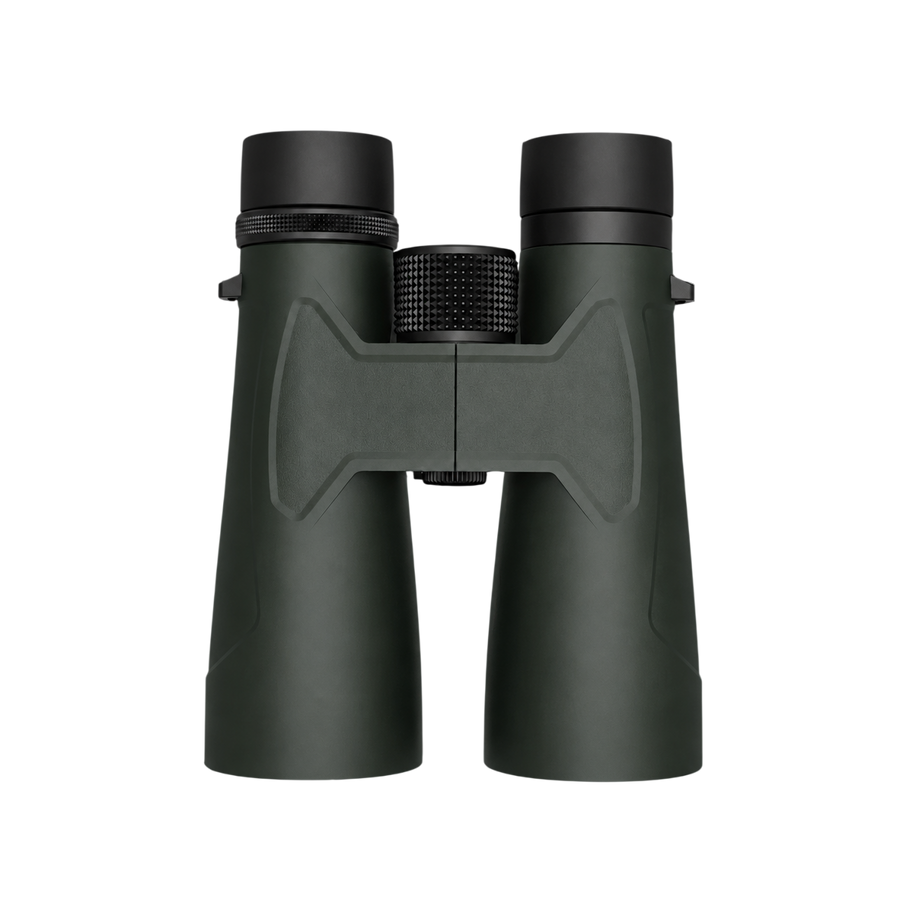
It is at the same time important to avoid unnecessarily pushing the herd. Observation from a distance with binoculars often provides more information than trying to get close. If the animals are repeatedly disturbed in their daytime resting place, they can change their entire use of the territory.
Fallow deer in traffic
Strong local populations also mean more road crossings, especially where fixed transitions go between forest and feeding areas. Animals in a herd can follow each other across the road, so one animal is not necessarily the last.
For hunters and landowners, knowledge of these passages is useful both for traffic safety and for planning fences, planting, and hunting. If a hit animal flees the scene, the situation must be treated as a possible search and handled according to the current procedures.
Frequently asked questions about fallow deer
What is the male and female called?
The male is called a fallow deer or simply deer, the female a doe, and the young animal a fawn.
Is fallow deer larger than roe deer?
Yes. Fallow deer is clearly larger than roe deer, but smaller than red deer.
How do you recognize a fallow deer?
A mature fallow deer has characteristic shovel-shaped antlers. The species also has a long tail and a clear light mirror patch with black markings.
When is fallow deer in rut?
The rut typically falls in October and November.
Are white fallow deer albinos?
Not necessarily. White color variants can have normal pigmentation and are therefore not albinos.
Does fallow deer live in herds?
Yes. Fallow deer is social and often moves in herds, which can become large in dense populations.
Does the fallow deer lose its antlers?
Yes. The antlers are cast and regrown every year.
Is the hunting season the same throughout Denmark?
Not necessarily. There are local hunting times, so the current rules for the specific area must be checked.
Learn the few certain characteristics first
Fallow deer is a species where coat color can easily deceive. Therefore, the most stable characteristics are far more important than color.
Look at the size. Look at the tail and mirror patch. Look at the antlers, if it is a deer. And notice the social behavior.
When these things sit in the backbone, it becomes much easier to distinguish fallow deer from both roe deer and red deer – even when the observation only lasts a few seconds.
Cover photo: Johann-Nikolaus Andreae, CC BY-SA 2.0, via Wikimedia Commons (source)
Relevant equipment for observation and hunting
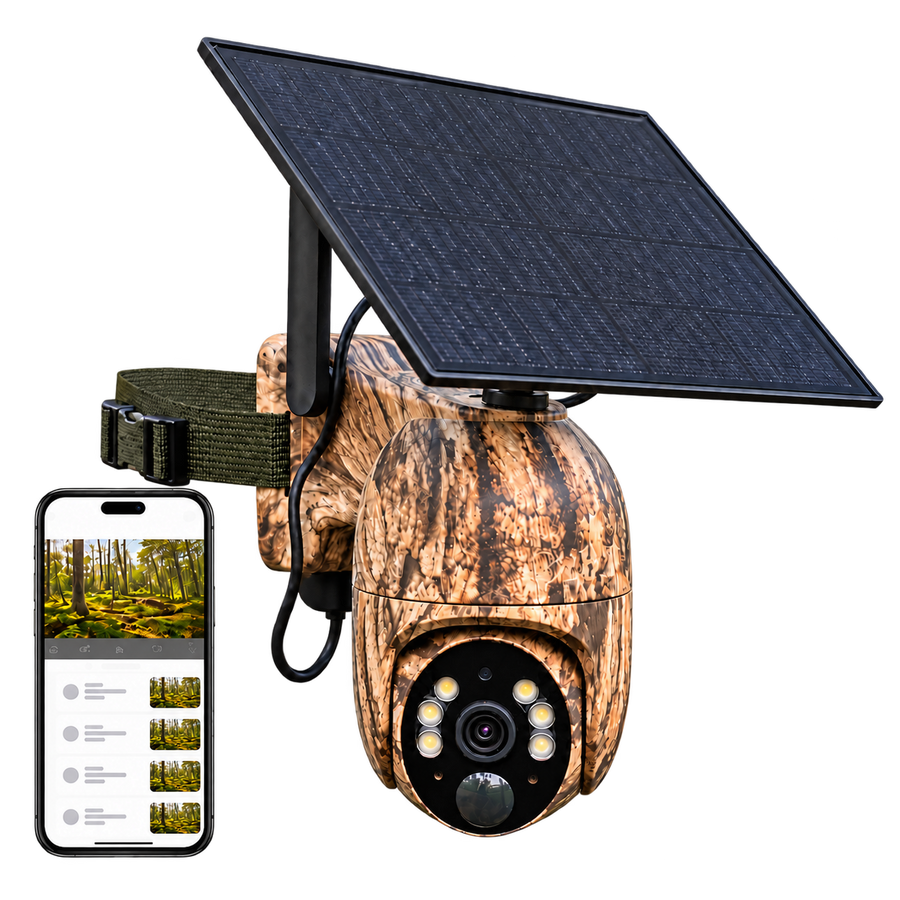
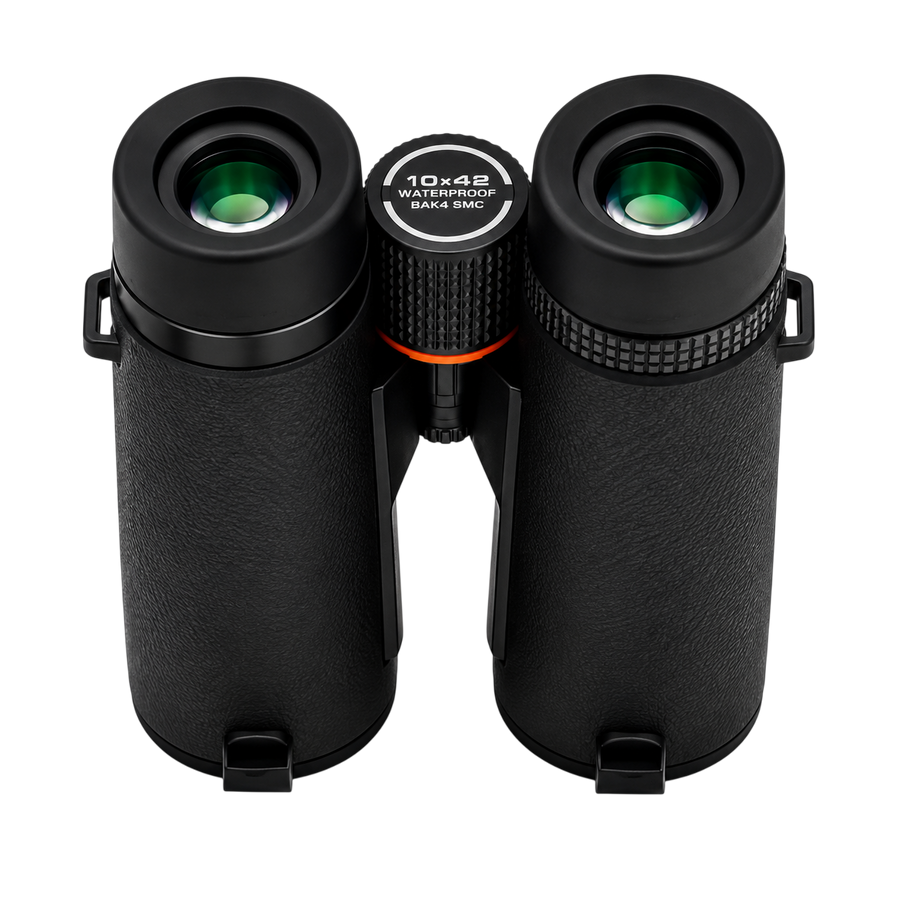
If you want to observe and identify wildlife from a distance, you can see our binoculars for hunting and laser rangefinder. To follow activity in the territory when you are not present yourself, you will find our game cameras. If you are in doubt about model choice, you can also read our guides to 10×42 vs. 10×50 vs. 12×50 and selection of HuntLive camera.